- Welcome Reader
About the Book
- About the Book
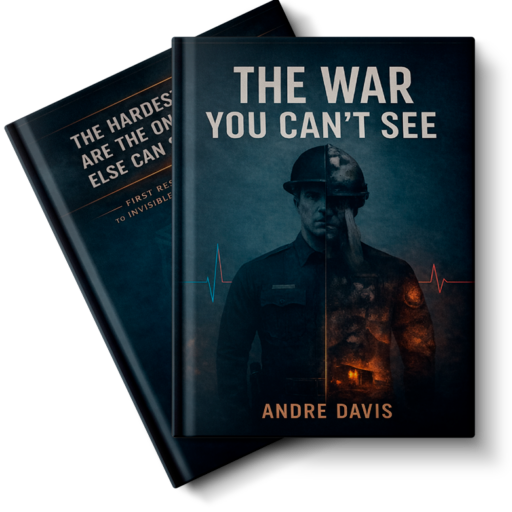
The War You Can’t See
The mission didn’t end. It just moved inside you.
This book is for the ones who have carried too much alone. The service members who came home but never fully came back. The police officers, correctional staff, and first responders who have seen more than any human was meant to see. The survivors of violence whose bodies still act like danger are everywhere. And the families who have loved them through the silence, the anger, and the distance.
At its core, The War You Can’t See delivers a simple but profound truth: trauma is not a sign of weakness. It is proof that your nervous system did exactly what it had to do to keep you alive. The problem is that no one showed you how to turn the alarm off once the danger passed. This book gives you the language to name what hurts and the tools to teach your body that the war is over.
Andre Davis writes the way people actually talk in squad cars, break rooms, and late-night phone calls when sleep won’t come. No lectures. No clinical jargon. Just plain honesty, real stories, and practical steps you can use right away. Whether you wear a uniform, a badge, scrubs, or invisible scars, this book meets you where you are and walks with you toward something better.
You learned how to survive. Now it is time to learn how to live.